Education Center

Learn about IQ Catheter technology, urethral strictures, and clinical benefits

Three Functional Zones

A single-use catheter designed for gentle catheterization. The IQ-Cath has three functional zones — the rounded tip, flexible zone, and guiding zone — plus smooth, rounded eyelets designed to be gentle on the sensitive lining of the urethra.

IQ Catheter Zones Diagram

Rounded tip (patented)

The head of the IQ-Cath is a soft ball on a highly flexible neck, designed to help the catheter pass narrow points and bends in the urethra.

Flexible zone (patented)

The combination of rounded tip and flexible zone allows the IQ-Cath to gently follow the course of the urethra.

Guiding zone

This area of the IQ-Cath, which continues to the connector, is designed to be relatively more rigid. This makes the catheter easier to guide and advance.
Understanding Urethral Strictures & False Passages

Why some people find catheterization difficult — and what to watch for

What are Urethral Strictures?

Urethral strictures are narrowings of the urethra, usually caused by scar tissue. They can result from trauma, infection, inflammation, or previous medical procedures — including traumatic catheterization. These narrowings can make catheterization difficult.

Tip design, flexibility, size and lubrication can all affect how easily a catheter passes a narrowed urethra. The IQ Catheter's soft, rounded tip and flexible front section are one design approach; angled Coudé/Tiemann tips are another. The right choice should be made with a urologist or continence nurse — see Catheter Tip Designs Explained.

What are False Passages?

A false passage is an artificial tract created when a catheter accidentally penetrates through the urethral wall instead of following the natural urethral path. This serious complication can occur when:

  • A catheter is forced past a stricture or significant resistance
  • Excessive pressure is applied during insertion
  • The catheter encounters anatomical resistance
  • Previous trauma has weakened the urethral wall

False passages can lead to bleeding and infection, and make future catheterization more difficult. Whatever catheter you use, gentle insertion, good lubrication, and never forcing past significant resistance are the key protective measures. If you have reduced sensation, watch for bleeding or new difficulty passing the catheter, and contact your healthcare provider if either occurs.

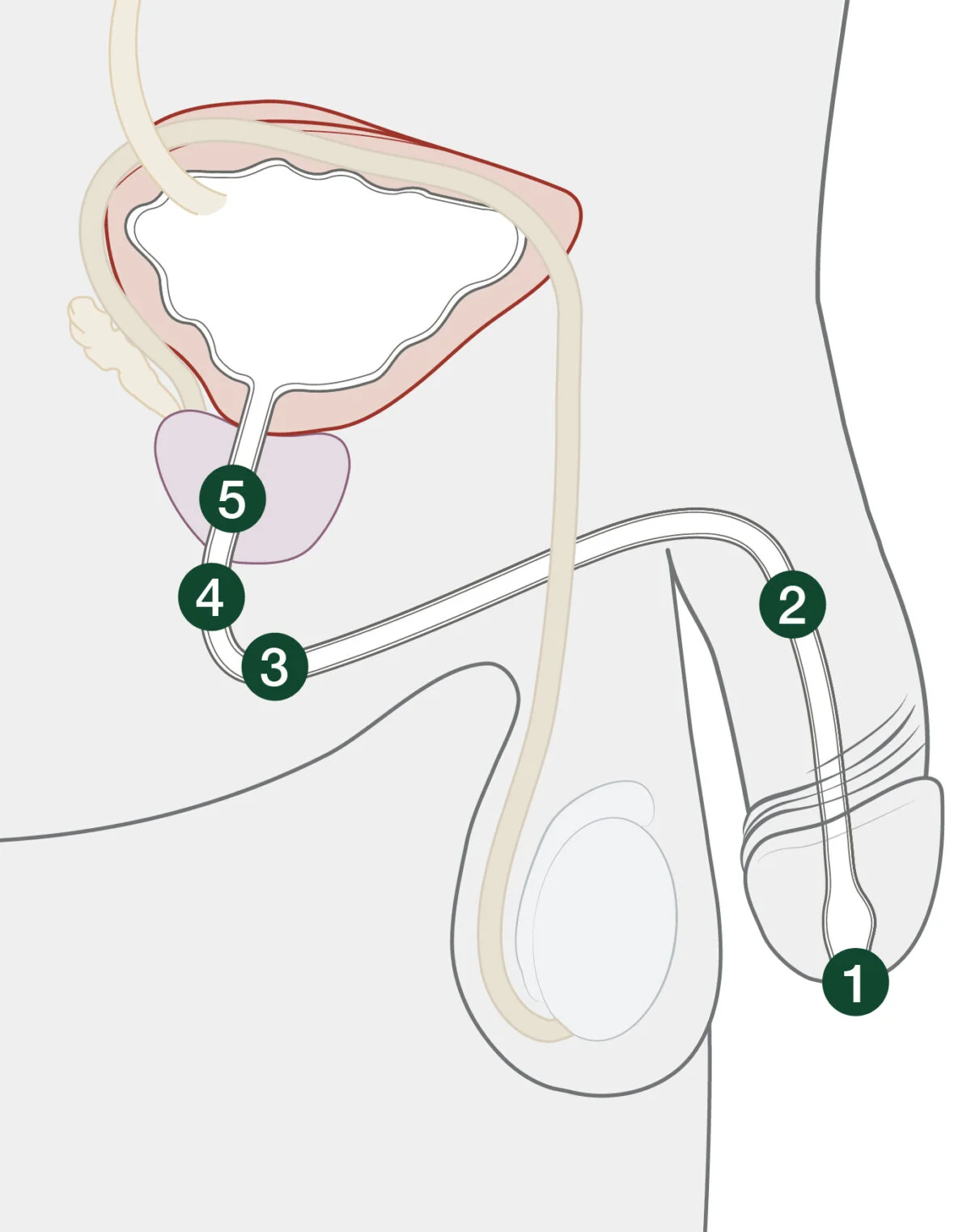
Common Stricture and Narrowing Sites in the Male Urethra

1

Urethral Meatus

External opening of the urethra

2

Fossa Navicularis

Widening near the meatus

3

Bulbar Urethra

Most common stricture location

4

Membranous Urethra

Through the pelvic floor

5

Prostatic Urethra

Passes through the prostate gland - affected by BPH

Male Urethral Anatomy

Male Urethral Anatomy Diagram

Anatomical diagram showing common sites of stricture or narrowing in the male urethra

The Patented IQ Catheter Design

Three functional zones designed to follow the curves of the male urethra

Soft Spherical Head

PATENTED

The rounded, soft tip is designed to keep the head from catching on folds of the urethral lining as the catheter advances.

Highly Bendable Neck

A flexible zone of approximately 5 cm is designed to let the catheter bend with the curves of the urethra rather than forcing a straight path.

Polished Smooth Eyelets

Drainage eyelets are rounded and polished on both inside and outside surfaces, designed to be gentle on the urethral lining during insertion and withdrawal.

Hydrophilic and Gel Versions

Hydrophilic versions have a coating that lubricates the length of the catheter; gel versions come pre-lubricated or with gel to apply. Both are designed to reduce friction, and each catheter is for single use.

Designed for the Male Urethra

The flexible front section is designed to follow the natural curves of the male urethra, including the bend near the prostate. As with any catheter, never force past significant resistance, and choose your catheter with your urologist or continence nurse.

Follows natural curves
No tip orientation needed
Firmer shaft for guiding